

Air conditioners give you much-needed thermal comfort during a scorching summer in Hackensack, NJ. More specifically, air conditioners help maintain room temperature at an optimal level.
They also help remove airborne particles and humidity from the room. This complex task of controlling the ambient conditions in a large living space has become simpler with the introduction of HVAC systems.
What AC Systems Are Built to Do in Hot Climates?
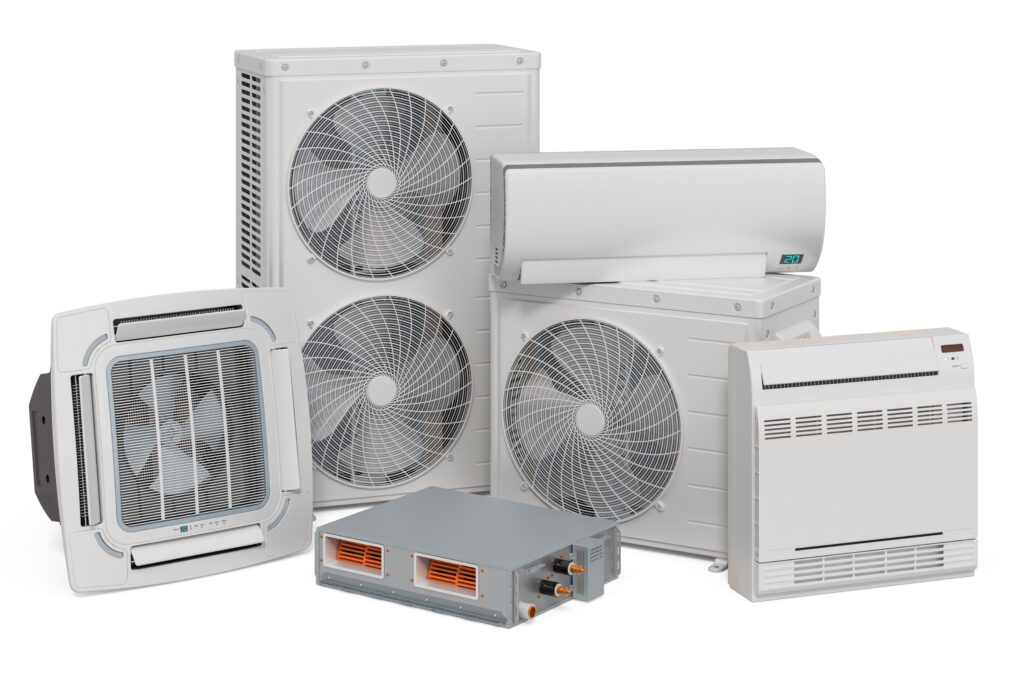
AC Systems in NJ
AC represents an air conditioning system that cools your space during hot weather. H represents the heating systems that keep your space warm during cold weather. V represents ventilation systems that bring you clean air and maintain air quality by controlling humidity.
Typically, an HVAC system consists of several units, working together to maintain the condition of your living environment. During summer, cold, clean air is supplied and hot, contaminated air is collected from the living space.
Ducts, Filters, and Delivered Air
Air ducts are meant for bringing fresh air into the environment and collecting return air for recirculation. Once the air enters, they are filtered to remove dust particles and impurities by two stages of filters. This conditioned air is delivered to the desired space or environment by means of a blower or a fan. Air conditioners require maintenance & tune up at least once a year.
The Rule Every AC System Has to Obey in Hot Climates
An air conditioner has two connected coils with continuously flowing refrigerant fluid inside them. The coil inside the room is called the evaporator and the coil outside the room is called the condenser. The fundamental principle of an air conditioner is simple.
Just keep the evaporator cold, more specifically colder than the room temperature and the condenser hot, more specifically hotter than the surroundings. With these conditions, the continuously flowing fluid will obviously absorb the heat from the room and eject it out to the surroundings.
Ejecting Heat Into Hot Atmospheric Air
The compressor increases the pressure of the refrigerant. The compressor handles the refrigerant in its gaseous state so that as it compresses the gas, the temperature rises along with the pressure. The temperature at the compressor outlet will be far higher than the atmospheric temperature.
Therefore, if you pass this hot gas through the condenser heat exchanger, you can easily eject the heat. A fan in the condenser unit makes this task easier. During this heat ejection phase, the gas gets condensed to a liquid. In an air-cooled chiller, the refrigerant flowing through the condenser is cooled by atmospheric air.
How the Cold Air Itself Is Produced
An expansion valve is fitted at the exit of the condenser. The purpose of the expansion valve is to restrict the refrigerant flow, thus reducing the pressure of the fluid. As the pressure drops, one part of the refrigerant liquid evaporates.
However, for this evaporation to happen, some energy should be supplied to it. This energy comes from within the refrigerant, so its temperature drops. This is how the cold refrigerant is produced inside an air conditioner.
This low-temperature refrigerant should be at a temperature lower than the room temperature. So by passing the room’s air over the evaporator coil, the room temperature will drop.
Cooling Capacity and Load in Bergen County, NJ
The ton represents how much heat the evaporator can absorb from the room. In simple words, it represents an air conditioner’s heat removal capability. Modern air conditioners use scroll compressors instead of the reciprocating type.
They are silent and they have good speed control. Modern air conditioners use a variable-speed motor technology called inverter technology for better temperature control. Just by adjusting the motor speed, the compressor speed, the refrigerant flow rate, and the cooling capacity can be controlled accurately.
Water on the Evaporator Coils
Near the evaporator coils, the air temperature will be quite low. This will lead to water condensation on the evaporator coils. That’s why a pipe to remove this water condensate.
Protecting the Compressor in Hot Climates
The compressor of an air conditioner is designed to handle only vapor and a small fraction of liquid content can affect its performance and damage the compressor. This condition is maintained by a special kind of expansion valve called a thermostatic expansion valve.
The abbreviation is TXV. TXVs do not control the room temperature; they just make sure that the compressor receives the refrigerant in pure vapor form. The refrigerant flow rate and the room temperature are controlled by the speed of the compressor.
Frequently Asked Questions
What keeps an AC system cooling in hot weather?
Just keep the evaporator cold, more specifically colder than the room temperature and the condenser hot, more specifically hotter than the surroundings.
What does the ton rating of an AC system mean?
The ton represents how much heat the evaporator can absorb from the room.
Why is water dripping from an AC system in Bergen County, NJ homes?
Near the evaporator coils, the air temperature will be quite low. This will lead to water condensation on the evaporator coils.
How do AC systems in Hackensack, NJ hold a steady room temperature?
Just by adjusting the motor speed, the compressor speed, the refrigerant flow rate, and the cooling capacity can be controlled accurately.
What can damage an AC system compressor in hot climates?
The compressor of an air conditioner is designed to handle only vapor.
Hot Climates and AC Systems
The temperature is lower than the room temperature in the coil inside the room and the temperature is higher than the atmospheric temperature in the coil outside the room. All these components work together in order to deliver the ambient air to space from atmospheric air.
The combination of all these systems is mandatory to provide you with a comfortable living space during all weather conditions. Contact us to get AC repair services.