
Plumbing makes noises, and those noises are actually telling you something about your plumbing system. Normally, certain sounds lead to certain things. When a faucet is turned off and a loud bang follows in the plumbing behind the wall, that has a name, it’s called water hammer.
What Causes Water Hammer
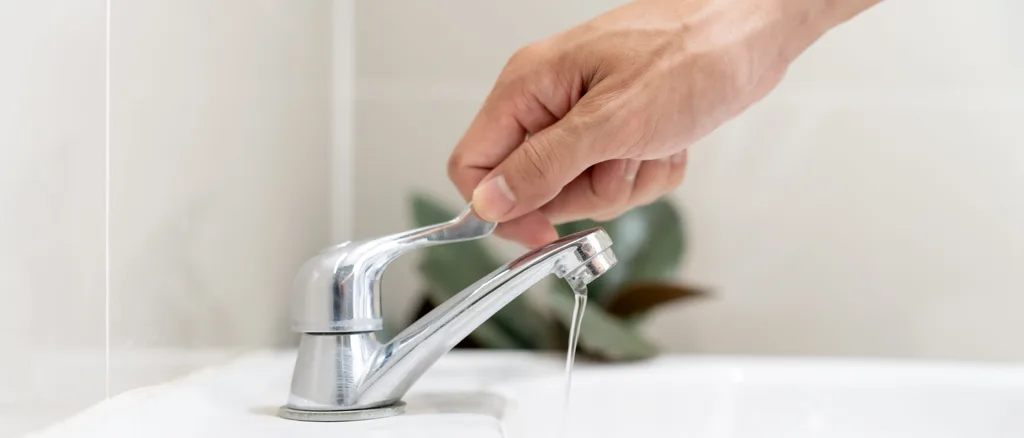
When a faucet is on and running, water is moving in that direction at quite a rate of speed. When the faucet is turned off suddenly, it’s like a car that hits a brick wall, creating a shock wave headed back behind the wall into the plumbing lines.
Do Your Pipes Bang?
A hammer or a banging noise is caused by a sudden on and off valve, as a washing machine or any kind of cylinder that pops open and pops closed real quick, causing water flowing through the pipes to stop suddenly and jolt.
Other Plumbing Noises Worth Knowing
A ticking noise, heard when running hot water, is thermal expansion in the copper pipes, since heat expands and cold contracts. This noise doesn’t mean there’s anything wrong or that there’s a drip on the wall.
A screeching or squealing noise usually means something is wrong, often a bad fill valve where the rubbers or washers inside start going bad and closing differently, or a deteriorated washer at the angle stop starting to clog up the line.
A gurgling noise while taking a shower or running a lavatory, or while flushing a toilet, tells you there is a blockage in the sewer or drain line, which is worth getting in touch with a plumber about before it becomes expensive.
The Solution: Draining and Resetting the System
Go shut the water off at the main. As a homeowner, knowing where the water main shutoff is should be one of the number one priorities. Once the water is off at the main, open up every valve in the house and let them drain out.
That includes showers, tubs, everything, and even flushing the toilets. After everything’s drained out, which doesn’t take long, turn everything back into the off position.
Turning the Water Back On
Now go turn the water back on. This is important, turn it on slowly so there isn’t a sudden burst of pressure in the lines that can cause leaks. Essentially, what’s been done by doing that is introducing air back into the system, so now when the water is turned back on at the faucet, it will do what it’s supposed to do, since that chamber is likely filled with air again.
When to Call a Plumber
That will likely work. In the event that it doesn’t, contact a plumber and have what’s called a water hammer arrester installed. It’s not a big deal, but hopefully that helps solve the problem.
Other Causes to Check
A Valve Not Fully Open
The cold water valve and line is not vibrating, however, the warm water line, this whole entire plumbing portion is making an aggressive vibrating sound. So what you want to do is turn off the hot water valve, and the humming and vibrating disappear.
Starting with the number one most common cause of that humming and vibrating sound is a valve that is not in the fully open position, as you can see here, it’s in the fully closed position. Let’s open it back up to the fully open position. Full open is perfectly in line with the actual water line, and again, the humming has gone away.
A Faulty Valve That Needs Replacing
In the event that it is in the fully open position and that does not solve your humming and vibrating sound, you are going to need to replace this. We’ve covered option number one, which is the most common reason why you get a humming and vibrating sound, because your valve is not in the fully open position.
The second option, in the event that your valve in the fully open position does not fix your humming or vibrating sound, is to replace this valve. And again, don’t stress out, that is not a difficult project, that is a friendly DIY project.
Too Much Pressure in the Line
Now the third option, in the event that you actually replace this valve and you are still experiencing a humming or vibrating sound, chances are you have too much pressure in the actual plumbing lines, and you will need to purchase what is called a pressure-reducing valve.
And honestly, that is rarely the case, it is almost always either the valve not in the fully open position or a faulty valve that just needs to be replaced.