
Homeowners in New Jersey often get confused about choosing between two popular heating systems: a boiler and a furnace. Let’s explore which one is more suitable for New Jersey homes.
How a Furnace Works
Furnaces heat air, using electricity or natural gas to operate. Some units also use propane. A furnace works alongside your house’s air conditioning system and pushes heated air through the ducts into your home using a blower.
Natural gas is burned to warm up the heat exchanger. The exhaust fumes are released through the flue gas vent. The blower fan then pushes air over the heat exchanger and circulates it around your home.
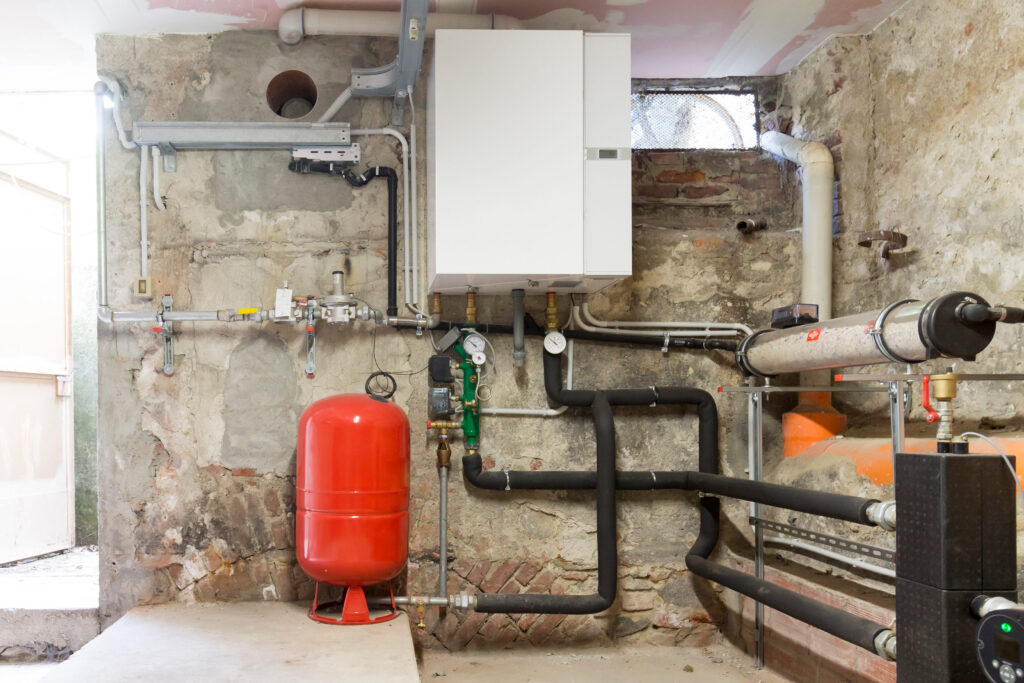
Boiler vs Furnace
The furnace runs until the thermostat detects the right temperature and shuts the furnace off. Modern furnaces use a draft inducer fan to help exhaust the emissions, and this forced draft also increases efficiency. Condenser furnaces use a dual heat exchanger to condense water vapor, extracting even more heat out of the combustion.
How a Boiler Works
A boiler provides heat via water, in the form of either heated water or steam. It does this using natural gas burning or electricity to heat the water. These units work by bringing water to extremely hot temperatures, then using radiation systems and the house’s flooring or radiation pipes to transfer heat throughout the home.
A boiler doesn’t heat air; it heats water. That hot water, or sometimes steam, is pumped through a closed loop of pipes to radiators, baseboard heaters, or even tubes under the floor. These surfaces then radiate heat into the room, warming the objects and people in it directly.
Similarities and Differences
Both units can be run on multiple types of fuels and power sources, including electricity and natural gas. In terms of life expectancy, both can last for about 10 to 15 years.
In terms of fuel, furnaces can run on natural gas, electricity, and propane, while boilers can also run on wood pellets. When it comes to power rating, furnaces have BTU ratings while boilers are measured in terms of kilowatts.
Furnaces use blowers to push hot air throughout the ducts of the house, while boilers use radiator tubes to transfer heat.
Efficiency and Real-World Performance
A furnace might boast a 98% AFUE rating, but forced air systems can lose up to 30% of their heat through leaky ductwork. Boilers deliver heat through water with virtually zero distribution loss. Often a lower-rated boiler outperforms a higher-rated furnace in real conditions.
Furnaces are rated by AFUE (Annual Fuel Utilization Efficiency), a ratio of the fuel burned versus the fuel converted into heat. Older furnaces have an efficiency rating of 70 AFUE or less, meaning only 70 percent of the fuel is turned into usable heat. Mid-efficiency furnaces are around 80, and high-efficiency condenser furnaces are generally 90 and above.
Comfort and Air Quality
Furnaces create temperature swings and circulate dust and allergens on every cycle. Boilers provide steady, radiant heat with zero air movement, making them the clear winner for households managing allergies or asthma. This radiant heat is often considered more comfortable, like the warmth from the sun.
Furnaces can create dry air and circulate dust, and some people dislike the noise of the blower and the feeling of being blasted with heat. Boilers are quiet, and since they don’t blow air, they don’t kick up allergens.
Cost and Lifespan
While furnaces consistently win on upfront installation cost, boilers win on long-term value. A standard gas furnace lasts 15 to 20 years, but a well-maintained boiler can easily last 25 to 30 years.
Furnaces are generally cheaper and easier to install. Boilers, while more expensive upfront, are often more energy efficient and provide a higher quality of heat. They also tend to last longer with fewer moving parts to break down.
Which System Fits Your Home
Looking to see who comes out on top when it comes to lower maintenance, the winner is the boiler, since furnaces require costly maintenance and repairs more frequently. In terms of lower noise, a boiler is likely preferable for a small home needing peace and quiet.
Replacing the furnace filter every three to six months is essential, since any restriction of airflow might cause the heat exchanger to overheat.
Making the Final Decision
Do you value the lower initial cost and quick heating blast of a furnace, or the quiet, even comfort and long-term efficiency of a boiler? One system moves air to keep you warm, while the other uses water. The best choice simply depends on the kind of warmth you want to live with, along with your home’s existing infrastructure.
The fundamental difference starts with delivery. Furnaces heat air and push it through ducts for fast heat delivery. Boilers heat water, delivering steady, radiant warmth with no air movement.